
[Full 5-Language Support] A Whirlwind 3-Hour Chronicle of Expanding a Japanese-English Blog to Chinese, Korean, and Spanish
The shocking realization that our supposed 5-language support was actually just two languages. A complete record of blazing-fast implementation to support Chinese, Korean, and Spanish alongside Claude Code.

[Full 5-Language Support] A Whirlwind 3-Hour Chronicle of Expanding a Japanese-English Blog to Chinese, Korean, and Spanish
“Wait, doesn’t it say 5 languages supported?!”
It was early Thursday afternoon when I was casually reviewing the implementation on the site’s develop branch. Just as requested of Cursor Agent, five national flags were neatly lined up on the language switcher button. But then, I tried opening the blog page in Chinese.
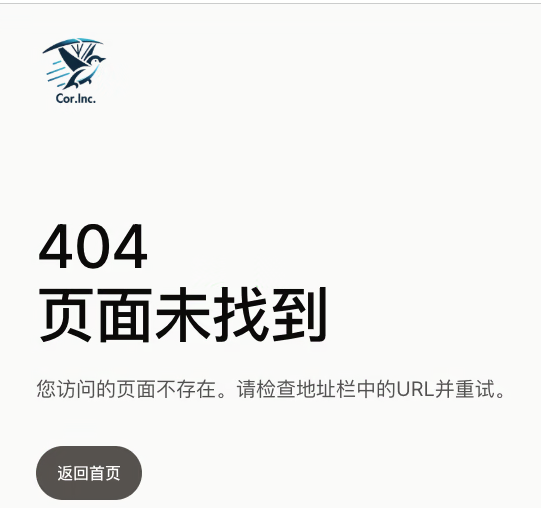
404 Not Found.
Upon digging in, a shocking truth came to light.
”5-Language Support” That Was Actually 2-Language Support
// utils/i18n.ts には確かに5言語の翻訳が...
export type Locale = 'ja' | 'en' | 'zh' | 'ko' | 'es';
Looking at the i18n settings, it certainly appeared to support 5 languages. The home page, the company overview—everything was properly translated. But then I looked at the blog page directory.
$ ls src/pages/*/blog/
src/pages/en/blog/:
[...page].astro  [...slug].astro

src/pages/zh/blog/:
ls: src/pages/zh/blog/: No such file or directory

src/pages/ko/blog/:
ls: src/pages/ko/blog/: No such file or directory

src/pages/es/blog/:
ls: src/pages/es/blog/: No such file or directory
Only the blog supported Japanese and English.

Kicking Off Rapid Implementation with Claude Code
At this point, the only option was to implement the remaining three languages. Fortunately, I had Claude Code. Without hesitation, I began the implementation.
Step 1: Duplicating and Modifying the Blog Pages
First, copy the English blog pages and modify them for each language.
# 中国語、韓国語、スペイン語のディレクトリを作成
for lang in zh ko es; do
  mkdir -p src/pages/$lang/blog/
  cp -r src/pages/en/blog/* src/pages/$lang/blog/
done
However, this alone won’t get it working. We need to update the language filters inside each file.
// 修正前(全ファイル共通)
const allPosts = await getCollection('blog', ({ data }) => {
  return data.lang === 'en' && !data.isDraft;
});

// 修正後(例:中国語版)
const allPosts = await getCollection('blog', ({ data }) => {
  return data.lang === 'zh' && !data.isDraft;
});
Step 2: Creating a Translation Script
Translating eight Japanese articles manually simply wasn’t realistic. So, I wrote an automated translation script using the Gemini API.
// scripts/translate-blog-all-languages.js
const LANGUAGES = {
  en: { name: 'English', author: 'Terisuke' },
  zh: { name: 'Chinese', author: 'Terisuke' },
  ko: { name: 'Korean', author: 'Terisuke' },
  es: { name: 'Spanish', author: 'Terisuke' }
};

async function translateToLanguage(inputFile, targetLang, body, frontmatter) {
  console.log(`📝 Translating to ${LANGUAGES[targetLang].name}...`);

  // タイトルとdescriptionを翻訳
  const titleAndDescription = `Title: ${frontmatter.title}\nDescription: ${frontmatter.description}`;
  const translatedTitleDesc = await translateWithGemini(titleAndDescription, targetLang);

  // 本文を翻訳
  const translatedBody = await translateWithGemini(body, targetLang);

  // ファイルを保存
  saveTranslatedFile(targetLang, translatedContent);
}


Step 3: The Battle with Errors
Having run the translation script, I set out in high spirits to verify the site.
$ npm run build
✘ [ERROR] Expected "}" but found "."
  script:/ProductsTable.astro:3:33:
    3 │   buttonTexts: {t.buttonTexts},
      ╵                ^
A storm of build errors.
A Succession of Bug Fixes
Issue 1: Mysterious Debug Code in ProductsTable.astro
// なぜか入っていた謎のデバッグコード
<script>
  console.log('Button text debug:', {
    buttonTexts: {t.buttonTexts},  // ← これが構文エラー
    goTo: {t.buttonTexts?.goTo},
    itemName: {item.name}
  });
</script>
Resolved by removing this debug code.
Issue 2: Missing Language Support in CategoryBadge
// 修正前
const categoryLabels = {
  ja: { 'ai': 'AI', 'engineering': 'エンジニアリング', ... },
  en: { 'ai': 'AI', 'engineering': 'Engineering', ... },
  // zh, ko, es が存在しない!
};

// 修正後
const categoryLabels = {
  ja: { ... },
  en: { ... },
  zh: { 'ai': '人工智能', 'engineering': '工程', ... },
  ko: { 'ai': 'AI', 'engineering': '엔지니어링', ... },
  es: { 'ai': 'IA', 'engineering': 'Ingeniería', ... },
};
Issue 3: PostCard Links All Navigating to English
// 修正前
const postUrl = currentLocale === 'ja'
  ? `/blog/${cleanSlug}`
  : `/en/blog/${cleanSlug}`;  // 他の言語でも/en/に飛んでしまう!

// 修正後
const postUrl = currentLocale === 'ja'
  ? `/blog/${cleanSlug}`
  : `/${currentLocale}/blog/${cleanSlug}`;
Issue 4: Translated, but Titles Remained in Japanese
This was the trickiest one. While the translation script seemed to be running properly, the title and description in the frontmatter remained in Japanese.
# 中国語の記事なのに...
---
title: "【爆速15分】MCPサーバーでMCPサーバーを作る!"  # 日本語!
description: "LT中止の絶望から生まれた奇跡..."  # 日本語!
lang: "zh"
---

# 【闪电15分钟】用MCP服务器构建MCP服务器!  # 本文は中国語
Investigating the cause revealed a bug in the translation script’s parsing logic. I addressed this by writing a separate correction script.
// scripts/fix-translated-frontmatter.cjs
function extractTitleFromBody(body) {
  const lines = body.split('\n');
  for (const line of lines) {
    if (line.startsWith('# ')) {
      return line.substring(2).trim();  // 本文の最初の見出しから抽出
    }
  }
  return null;
}
The Results of a Whirlwind 3 Hours
Roughly three hours after discovering the initial error. At last, every issue was resolved.
List of Implemented Features
- Creation of Chinese, Korean, and Spanish blog pages
- 5-language support for category pages
- 5-language support for tag pages
- 5-language support for RSS feeds
- 5-language support for checkout success/cancel pages
- Automated translation of 8 existing articles × 3 languages = 24 articles
- Elimination of all TypeScript errors
- Successful build (317 pages)
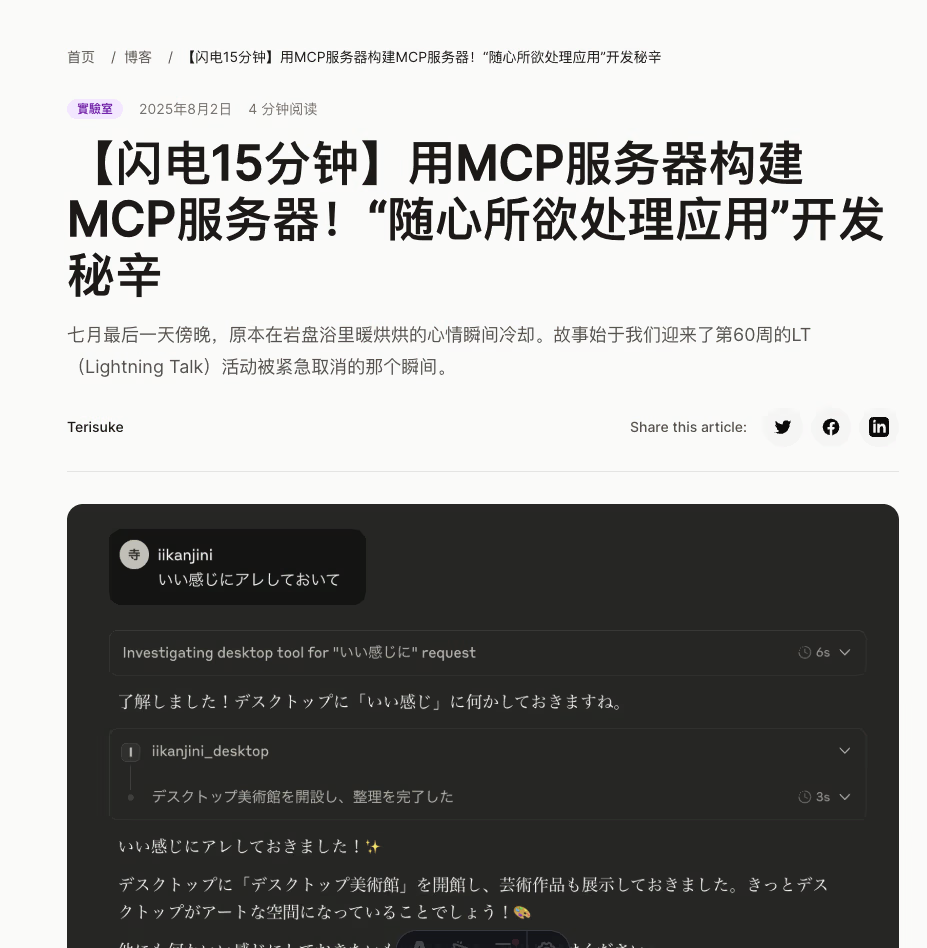
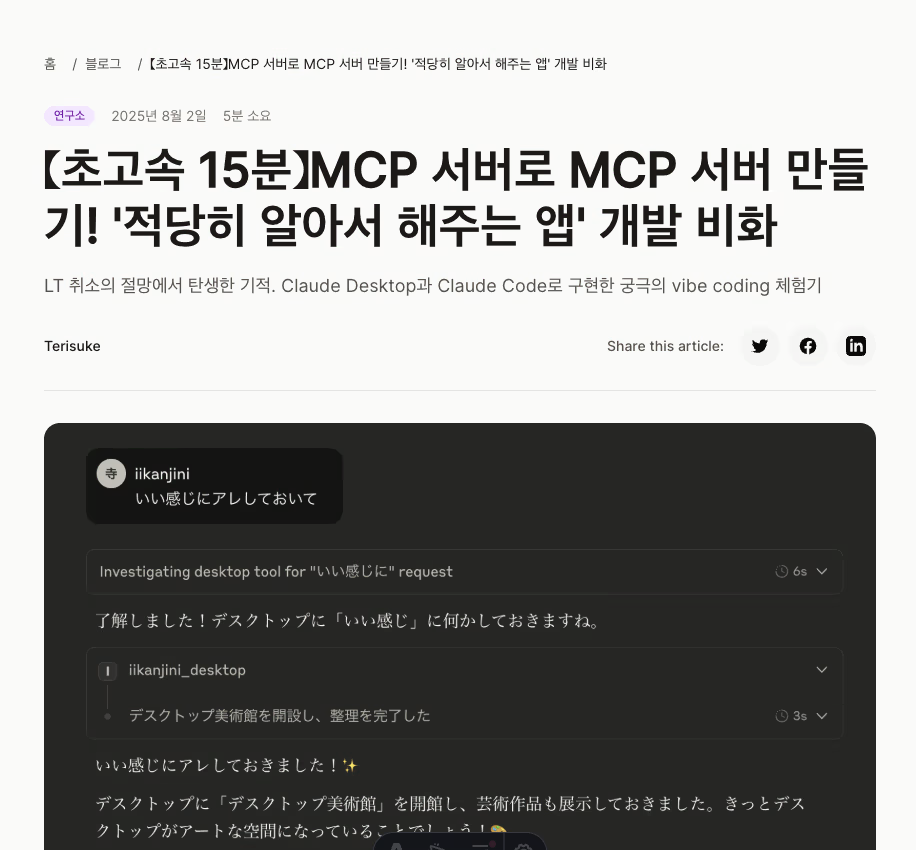
Translation Quality
The translations generated by the Gemini API were higher quality than expected.
日本語: 「いい感じにアレしとくアプリ」開発秘話
中国語: "随心所欲处理应用"开发秘辛
韓国語: '적당히 알아서 해주는 앱' 개발 비화
スペイン語: La historia detrás de la aplicación 'Hazlo bien y ya'
They resulted in natural translations that accurately capture the nuances of each language.
Lessons Learned
1. The Definition of “Supported” Is Vague
Even when something claims “5-language support,” you won’t know the actual extent of coverage until you check. Cases like this—where the top page is supported, but the blog is not—are probably more common than one might think.
2. The Power of Collaborating with Claude Code
Having Claude Code was a huge factor in being able to complete the implementation of 5 languages × 8 articles in just three hours. It was especially helpful in the following areas:
- Instantly pinpointing root causes from error messages
- Learning fix patterns and applying identical fixes en masse
- Efficiently implementing the translation script logic
3. Automation Scripts Are King
Translating 24 articles by hand would likely have taken far longer. Even if it takes an hour to build an automation script, the return is well worth it.
4. Errors Are a Goldmine
The numerous errors encountered this time were great opportunities to uncover latent issues in the system. The missing language support in CategoryBadge, in particular, would inevitably have become a problem down the line.
Conclusion: Toward True Multilingual Support
The shocking revelation that a site initially thought to have “5-language support” was actually just “pseudo-5-language support.” Yet through three hours of battle alongside Claude Code, we were able to achieve true 5-language support.
Now, blog posts display properly in Chinese, Korean, and Spanish alike. No more 404 errors.
This is what real multilingual support looks like.
The implemented code is available on GitHub. The translation script should also be usable in other Astro projects.
The three hours spent battling alongside Claude Code were intense, yet immensely fulfilling.
Want to put this into practice at your company?
Our AI reception "Cloudia" takes requests for contract AI development.
Learn more about our AI platform & contract developmentSupport this article
If this article was helpful, please support us with a tip. You can choose any amount.
Related Posts
What Git History Can and Cannot Show: Checking Four OSS Projects with Grift
This article separates what can be counted from a git history under stated rules, and what cannot. Four real OSS projects were checked at repository level. It does not guarantee a person's ability or that the record is complete.
How to Uphold "No Scores, No Rankings" in Implementation: 5 Conditions Grift CLI Set for the Next Release
Grift CLI promises not to output scores or rankings. During a cross-check in October 2026, it was discovered that while notes stated it was not a ranking, the table was sorted in descending order of commit count. We plainly explain the five acceptance criteria imposed on version 0.8 for clients, SES sales representatives, and engineers.
Why AI and Contract Development Cost Estimation Becomes Dependent on Individuals: How to Turn the Basis for Estimates into Corporate Assets
This article explains why contract development estimates vary from person to person, and how to keep an explainable basis by recording the breakdown and the assumptions. The estimation-support web app ended in September 2026. Current consultations are for AI contract development and adoption support.